


Stop Doing That: Why Parents Sometimes Need to Get Out of the Way
Parents naturally want to help their children succeed. When a child is struggling - whether with school, friendships, anxiety, or motivation - the instinct is often to step in, solve problems, and remove obstacles. Over the years, both as a teacher and now as a therapist, I've found that some of the most effective parenting advice can be surprisingly simple: Stop doing that.
I spent nearly two decades teaching health before becoming a therapist. Throughout my career, I've been less interested in telling young people what to think and more interested in helping them learn how to think through challenges for themselves. Today, I bring that same philosophy to my work with adolescents and families.
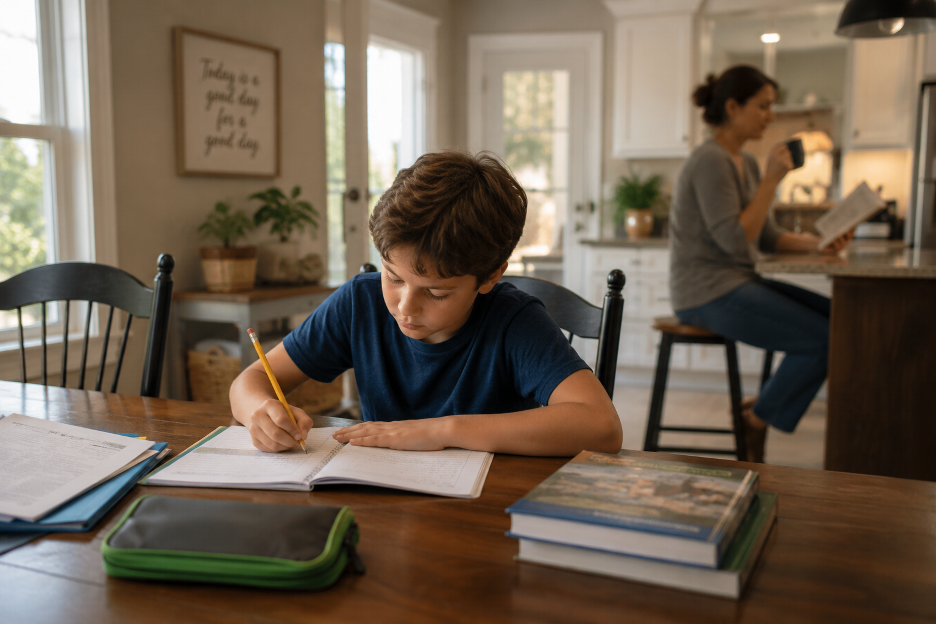
One lesson I've learned repeatedly is that parents often unintentionally make problems more complicated than they need to be. In parenting groups, I frequently hear parents describe elaborate systems they've created to help their children succeed: special study spaces, carefully selected planners, constant reminders, and ongoing monitoring of schoolwork. While these efforts come from a place of love, they often shift responsibility away from the child and onto the parent.
I once worked with a mother who was deeply concerned about her daughter's academic performance. Week after week, she described new strategies she was implementing to help her daughter complete homework and improve grades. She found the perfect desk. Then the perfect planner. Then the perfect pens.
As we talked, it became clear that we were focusing on the wrong problem. So I gave her some rather simple advice:
"Stop doing that."
The point wasn't that she should stop caring. Quite the opposite. What I saw was a parent working incredibly hard to solve a problem that ultimately belonged to her daughter. By managing every detail, she was preventing her daughter from experiencing the natural consequences of her choices and learning how to navigate challenges independently.
This reflects a broader principle we often discuss at Direction Behavioral Health: maximum support, minimum interference. Parents can remain loving, supportive, and involved while still allowing their children to face the outcomes of their decisions. If a student doesn't complete homework, the resulting grade becomes valuable feedback. If a teenager is struggling socially or emotionally, the goal is not to eliminate every discomfort but to help them develop the skills to manage those difficulties themselves.
One of the greatest risks of excessive involvement is the impact it can have on the parent-child relationship. When parents constantly monitor, remind, pressure, or control, interactions begin revolving around performance rather than connection. Conversations become about grades, assignments, or behavior instead of understanding the child as a person. Over time, children may become less likely to seek support when they genuinely need it because they associate their parents with pressure rather than partnership.
I've observed this shift not only as a therapist but also as an educator. Over the years, parents gained increasing access to their children's academic lives through online grade portals and real-time school updates. While that visibility can be helpful, the trade-off is that it sometimes replaces direct conversations between parents and children. Instead of asking, "How's school going?" parents may focus on what they're seeing online, turning academic performance into the primary measure of well-being.
The solution is not to become uninvolved. Rather, I encourage parents to focus on their long-term goals for their children. Before stepping in, it can be helpful to ask: Will this action help my child develop the skills necessary to become a capable, healthy, independent adult five or ten years from now?
Often, the actions that provide immediate relief in the short term can create greater challenges in the long term. Rescuing a child from every mistake may prevent them from developing resilience, responsibility, and problem-solving skills. Allowing them to struggle, while offering support and guidance, gives them the opportunity to learn.
Parenting will always involve difficult decisions and uncomfortable moments. Watching a child fail, make mistakes, or experience disappointment is never easy. I don't want to minimize how painful that can be. At the same time, some of the most meaningful growth happens when parents resist the urge to fix everything and instead create space for their children to learn from their experiences.
Sometimes, the most supportive thing a parent can do is not to do more, but to do less. In the end, our children grow not from what we do for them, but from what they learn to do for themselves.